
The Timeless Stage: Exploring London's West-End
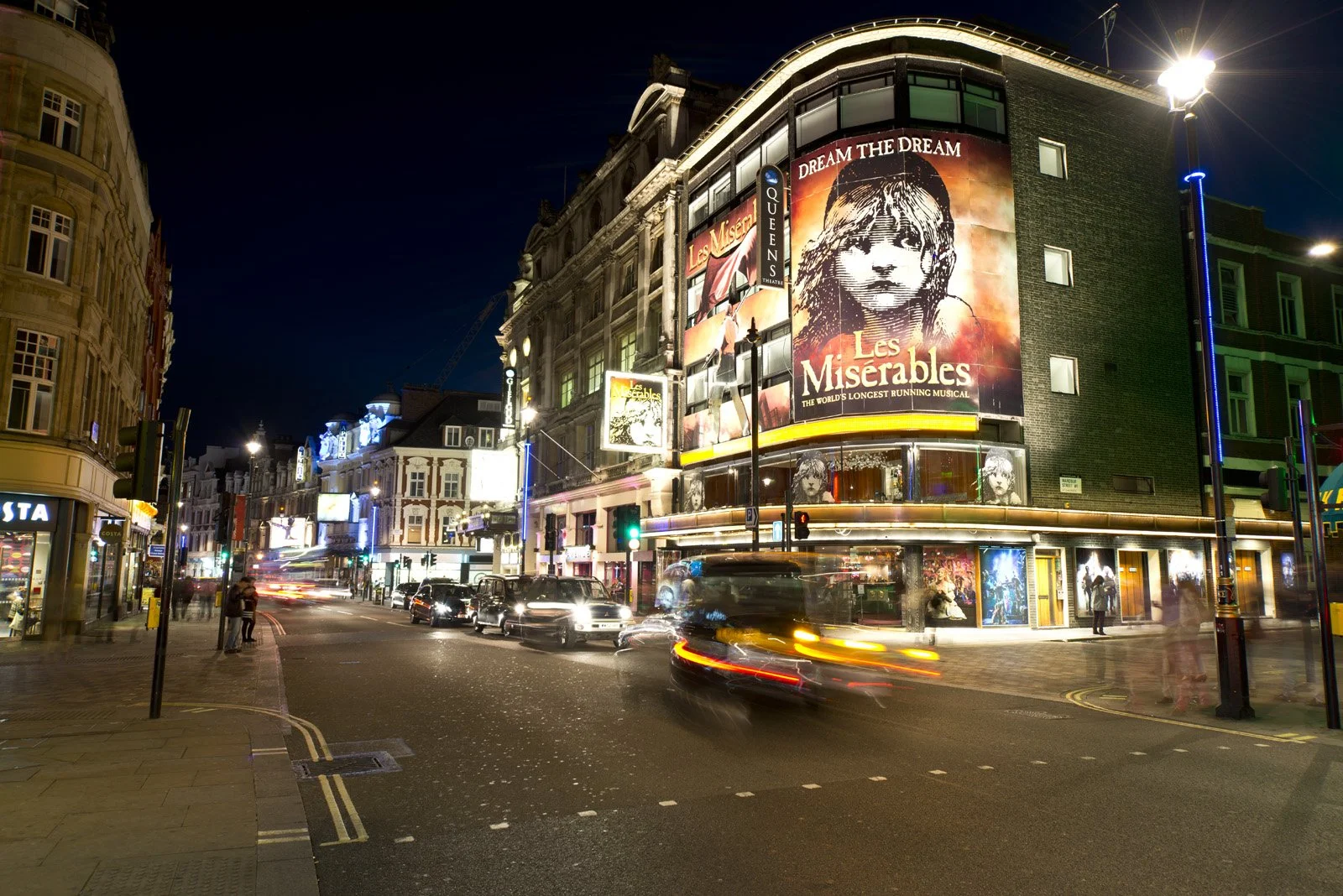
By Niamh McCartney
Edited by Jules Nasser
In central London lies an area hidden between the boroughs of Westminster, Kensington, and Chelsea; synonymous for generations with wealth, high society, parklands, and exclusive shopping. The West-end holds a cauldron mix of fogy buildings, wealthy aristocrats and politicians, as well as gawking tourists, bright lights and pizazz of theatre.
As early as the 10th and 11th century theatre rose from sacred performances taking place at religious ceremonies. 1350, religious groups used theatre as a way to spread the bible to an illiterate audience (Grahame). Then in 1576 a man named James Burdage opened The Theatre in Shoreditch London, London’s first purpose built playhouse. The continuation throughout the Elizabethan era saw the rise of permanent theatre companies and the start of modern theatre in London. Whilst wealthy nobles and monarchy provided support for playwrights and actors. In the late 15th century England was given its first popular playwright who would become the study of students for years to come, William Shakespeare. Then England goes through a rough patch with the Bubonic play and the civil war leading to the closure of all theatres. (“West End Theatre Through the Ages: From the Plague to COVID-19”)Mid 16th century playhouses started to open around the West-end of London, as the years went on so did the popularity of theatre, until nightly performances became the norm.
The longest running play in the West End to date is The Mousetrap. A murder mystery play by Agatha Christie, attracting a large audience for decades due to the classic whodunit case. Along with The Mousetrap there are the west end classics, The Lion King 1999, Wicked 2006, Les Miserables 1985, and of course Mamma Mia! 1999. I personally grew up watching the Roald Dahl play adaptations such as Matilda, Charlie in the Chocolate Factory, and James and the giant peach, stories that shaped my childhood in book form and I got to experience them all over again under the glistening lights of the theatre.
The West End has recently taken a turn to attract a more international audience with movie adaptations on the stage, the current top three plays in the west end are: My Neighbour Totoro, Stranger Things: The First Shadow, and Punch (Perry). We all know My Neighbour Totoro as a classic Studio Ghibli film, written and directed by Hayao Miyazaki. Its animated fantasy has gained popularity over the past couple of years. Stranger Things is a Netflix original TV program that everyone was hooked by in 2016 and we are all patiently waiting for season 5 to launch this month! Although it can already be viewed in the west at the Phoenix Theatre. Punch has gained quick popularity due to its short time on the theatre scene, it was launched on the 22nd of September this year and will end just next week on the 29th of November. In its short time on stage it has stolen the hearts of its many viewers and it is critically acclaimed (Wybrow).
Works Cited
Grahame, Kenneth. “Western theater | Definition, History, Plays, Characteristics, Examples, & Facts.” Britannica, 21 October 2024, https://www.britannica.com/art/Western-theatre. Accessed 18 November 2025.
Perry, Alice. “10 Best Plays in London [Updated November 2025].” SeatPlan, 15 November 2025, https://seatplan.com/london/discover/best-plays/. Accessed 18 November 2025.
“West End Theatre Through the Ages: From the Plague to COVID-19.” LONDON THEATRE DIRECT, 27 March 2020. Accessed 18 November 2025.
Wybrow, Laura. “Punch review: James Graham's play is a marvel on London's West End.” RadioTimes.com, 29 September 2025, https://www.radiotimes.com/going-out/going-out-reviews/punch-review/. Accessed 18 November 2025.
