
By Tiffany Au
Edited by Marina Yan
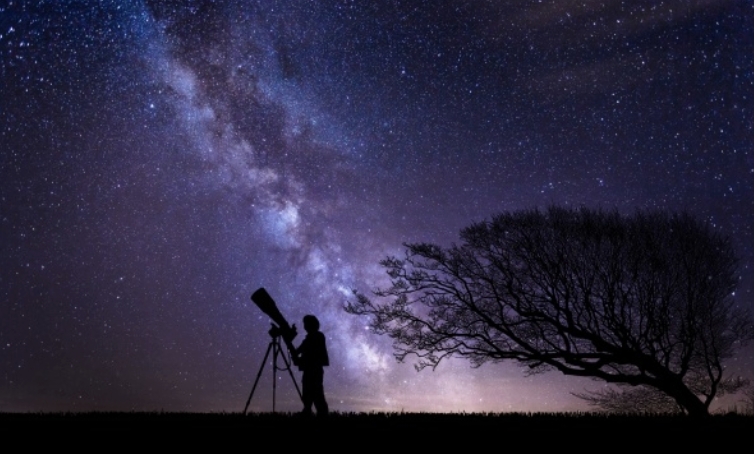
Welcome to the first installment of The Mythology of Space, a series where we discuss the inherent connection between humanity, stories, and the stars. This first article covers the history of astronomy and the mythology of the 8 planets of our solar system. Happy reading!
The concept of astronomy dates back to around 2000 BCE, being one of the oldest natural sciences, and it was often intertwined with religion, mythology, and philosophy, which greatly helped it gain traction in early times. It seems to have originated in Babylonia, where stars were seen as the manifestations of Mesopotamian deities, representing how many cultures viewed the sky as a sacred and divine place, believing it to be the home of the gods, where they would maintain the cosmic order. The Babylonians kept detailed records of the motions of celestial bodies, which allowed them to also track patterns and eventually make predictions on the behaviour of these bodies. By roughly 500 BCE, astronomers were able to apply mathematics to their studies, helping astronomy reach a high level of sophistication and accuracy. Meanwhile, other ancient cultures which were able to make great breakthroughs in astronomy include Greece, India, Egypt, China, Persia, and Mesoamerica, who helped develop astronomy as we know it today, contributing ideas such as the circumference of the Earth, the rotation of planets on an axis, calendars, star catalogues, and much more.
The names and the myths associated with these celestial bodies persist even in the modern day. The 8 planets in our Solar System are named after the Roman deities, after all, thanks to their widespread influence on Europe, though not all cultures adopt the same names—for example, much of East Asia bases their names off of natural elements (earth, fire, water, etc), whereas many South Asian, African, and Indigenous cultures base them off of their own deities or astrological traditions, and Greece uses their own pantheon’s corresponding deities’ names. The International Astronomical Union (IAU), which is the recognised authority for naming celestial bodies, has maintained the tradition of naming planets after mythological figures, and their moons with themes typically relating to said figures (though outside of the Solar System, numerical names are becoming more common). So, in order from closest to farthest from the Sun, the 8 planets and the mythology behind them:
1. Mercury (Greek counterpart Hermes): The messenger of the gods, a psychopomp (guide of souls to the afterlife), the god of travellers, money, merchants, and thieves, and son of Zeus and the Pleiad Maia. The planet has no moons.
2. Venus (Greek counterpart Aphrodite): The goddess of love, beauty, passion, and fertility (and in some places, worshipped as a war goddess). In some myths, she is the daughter of Zeus and the titaness Dione, while in other myths, she is said to have been born from the foam produced by Uranus’ genitals, severed by his son Kronos, which fell into the ocean. The planet has no moons.
3. Earth: The only one of the 8 planets to not be named after a Roman/Greek deity (in English). However, in other languages, the names Terra and Gaia are used, both equivalents for the primordial deity of the Earth and nature—essentially, Mother Nature herself. Gaia is one of the first primordial deities along with Erebus (darkness), Tartarus (the Underworld’s abyss), Eros/Cupid (love), and Nyx/Nox, who are all children of the first being in existence, Chaos.
4. Mars (Greek counterpart Ares): The god of war and courage, and son of Zeus and Hera/Juno. The planet’s two moons are named Phobos and Deimos after Mars’ children with Venus, who are the twin gods of fear, panic, and terror.
5. Jupiter (Greek counterpart Dias/Zeus): The king of the gods, as well as the god of the sky, thunder, lightning, and hospitality, and son of Kronos and Rhea/Ops, who overthrew his father along with his siblings to ascend to power. The planet has over 100 moons, which are all named after mythological figures related to Zeus—either his lovers (though this may not be the best term to use, as many were in fact raped or assaulted by him, with him being notoriously unfaithful to his wife/sister, Hera/Juno), his descendants, or other figures in his favour. For example, Jupiter’s largest moons Ganymede, Callisto, Io, and Europa are named after figures whom Zeus had affairs with, while moons such as Euporie, Eirene, and Pandia are named after his children/other descendants, and the moons Amalthea and Adrastea are named after the nymphs who nursed and raised Zeus.
6. Saturn (Greek counterpart Kronos): The leader of the Titans who ruled over the Earth during the Golden Age, as well as the god of agriculture and son of the primordial deities Uranus and Gaia. At his mother’s direction, he deposed and castrated his father to rise to power, and is not to be confused with Khronos, the personification of time. The planet has the most moons of any in the Solar System (274), some of which are named after Kronos’ siblings, the Titans, and their relatives, the Gigantes, though due to the fact that there are so many moons, many are named after figures from other mythologies. Some examples of moons named after Titans are Tethys, Hyperion, and Rhea, and the planet’s largest moon is actually simply named Titan, after their generation. On the other hand, examples of moons named after Gigantes are Enceladus and Mimas, while moons named after deities from Norse, Inuit, and Gallic mythology respectively include Ymir, Ijiraq, and Tarvos.
7. Uranus: The personification of the sky and father to the 12 Titans, the 3 Cyclopes, and the 3 Hecatoncheires, whose blood also brought about the 3 Furies, the 12 Gigantes, and the Meliae. He was also one of the first primordial deities, formed by Gaia (with whom he had children, as Greek/Roman myths have often involved incest). It is worth highlighting that Uranus is actually the Greek form of the god, as Caelus is the Roman counterpart, and the reasons for choosing the Greek form are unknown, though theories have proposed that due to an earlier discovered constellation already being named Caelum, Uranus was chosen to avoid confusion. Another interesting fact is that the planet’s 28 moons are not based in mythology like all of the other planets, but rather characters from literature, specifically William Shakespeare and Alexander Pope’s works, which include Titania, Miranda, and Umbriel.
8. Neptune (Greek counterpart Poseidon): The god of the sea, storms, earthquakes, and horses, and son of Kronos and Rhea/Ops, who helped his brother Zeus overthrow their father, along with their siblings Hestia/Vesta, Demeter/Ceres, Hera/Juno, and Hades/Pluto. The planet’s 16 moons are fittingly named after minor sea gods and nymphs, as they are subjects of Poseidon, and some examples include Triton, Proetus, and Despina, though some moons are also named after classes of water deities, such as Naiad and Nereid, rather than specific figures, while the moon Hippocamp is named after the mythological creature related to Poseidon.
Thus concludes the first installment of The Mythology of Space—be on the lookout for the next article discussing the sun, the moon, and dwarf planets!
Bibliography
"All Moons of Jupiter." NASA, 14 Apr. 2026, science.nasa.gov/jupiter/jupiter-moons/all-jupiter-moons/. Accessed 21 July 2026.
Cook, Jason. "7 Ancient Cultures and How They Shaped Astronomy." Office of Astronomy for Development, 2018, astro4dev.org/7-ancient-cultures-and-how-they-shaped-astronomy-guest-blog/. Accessed 21 July 2026.
Friedlander, Michael Wulf, Evans, James. "astronomy". Encyclopedia Britannica, 20 Jul. 2026, https://www.britannica.com/science/astronomy. Accessed 21 July 2026.
Hunger, Hermann. "The relation of Babylonian astronomy to its culture and society." The Role of Astronomy in Society and Culture, https://doi.org/10.1017/S1743921311002158. Accessed 21 July 2026.
"Moons of Uranus." NASA, science.nasa.gov/uranus/moons/. Accessed 21 July 2026.
"Neptune Moons." NASA, science.nasa.gov/neptune/moons/. Accessed 21 July 2026.
"Planets of the Solar System in Different Languages." GeoNames, 2025, geonames.de/planets.html. Accessed 21 July 2026.
"Saturn Moons." NASA, science.nasa.gov/saturn/moons/. Accessed 21 July 2026.
"World Mythology: Myths and Astronomy." St. Louis County Library, 27 Feb. 2026, slcl.libguides.com/c.php?g=1400971&p=10368496. Accessed 21 July 2026.
