
The Necessity of Representation in Media
By Tiffany Au
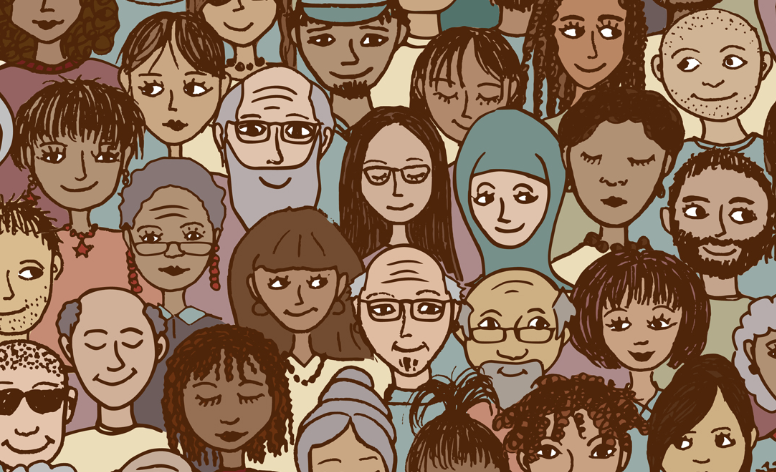
Media (noun) is defined as the main means of mass communication through which people receive information or entertainment. Books, newspapers, music, movies, the Internet; practically everything we consume nowadays is media, from hardback novels to social media platforms. Nevertheless, something that seems scarcely found is proper representation of the unique identities in our world. One could reasonably assume that key foundations of one’s self—races, genders, sexual orientations, disabilities, etc. should be reflected in the media we consume, yet this is evidently not true. So why is this the case? More importantly, why does representation matter?
While media has made great strides in recent years to represent the diversity of our planet, it unfortunately cannot be said that people of minority groups are represented as accurately as those in the majority of a particular country or region, resulting in a lack of variety with both the real people they discuss, and the characters they create. Stereotypes seep into the background of entertainment, perpetuating harmful beliefs and ideas, and leading to inaccurate depictions which are at best misleadingly strange, and at worst, downright harmful. When people have limited exposure to a particular group, the media plays a strong influence on perceptions of them, and if these portrayals are lacking, people may be led to mistakenly believe that this reflects on the real world, adopting ideas that this group is negligible, or even that they should be treated differently.
This is most prominent within the entertainment industry, as it likely stems from the need to create profit, and targeting the majority population in a given region would logically lead to higher viewership, generating more revenue for creators. Of course, this should not be their main motivation, as it completely disregards the real distributions of these types of people in real life, which is why we need to not only improve the quantity of diverse groups represented in media, but also the quality of this representation.
However, this is much easier said than done because of the way media has been regulated in the past. Guidelines such as the Hays Code caused content in the film industry to be heavily regulated and censored under the pretext of upholding their “moral obligations”, forbidding the use of obscenity and restricting how certain topics would be represented on screen. Violence, substance use, miscegenation, homosexuality, and promiscuity were condemned, and depictions of these topics were only permitted if to denounce them completely, practically reducing all protagonists to be straight, white, and Christian. Meanwhile, women were submissive, traditional, and conservative, often being confined to the home, and if they were depicted as independent or strong, they would almost certainly be punished for it by the end of the film, whereas villains would frequently be queer-coded, represented through stereotypes, and then faced with tragic or violent endings. This was done to imply that people who deviated from the “norm”—heterosexuality, whiteness, and Christian faith—were intrinsically evil and deserved to suffer for simply being the way they were. Fortunately, the Hays Code was replaced in 1968 by the Motion Picture Association of America (MPAA) rating system in 1968, after 34 years of enforcement.
On the other hand though, people are starting to become more aware of this lack of representation, and measures have been created to assess just how well or how poorly different types of people are represented, showing the progress that has been made in recognising the flaws within our society and its media. For example, the Bechdel test, created by Alison Bechdel, is a litmus test which quantifies female representation in any given piece of media through 3 criteria: whether it features at least 2 named women, whether these women interact with each other, and whether they converse about something other than a man. While not a proper evaluation of how feminist a work may be, it accurately points out the disparity between the representation of different groups, and reveals just how low the bar is for this sort of representation. The amount of well-known works which do not pass this test is quite astounding - think of The Great Gatsby, Fahrenheit 451, 1984, the entire Lord of the Rings trilogy, Ratatouille - and this shows how, while such media may have other strengths in craftsmanship or audience engagement, having minimal, or even no representation is often normalised, which is why it is such a crucial thing to fix. Other similar tests include the DuVernay test for racial diversity, the Vito Russo test for LGBTQ+ representation, the Fries test for representation of people with disabilities, and the Cooper test for diversity of body types.
Furthermore, the representation of minorities has even been the subject of studies. According to an article published in 1969 by Cedric Clark, there are four evolutionary stages of minority media representation, which are 1) non-recognition, 2) ridicule, 3) regulation, and 4) respect. In the non-recognition stage, a minority is not represented at all, and is completely absent from or invisible in media. In the ridicule stage, minorities begin to be represented, but are depicted primarily as subjects of mockery and based on offensive, inaccurate stereotypes or caricatures, reducing entire communities to one-dimensional characters (at the moment, it seems that representation for most minorities lies somewhere in between this, and the next stage). In the regulation stage, representation improves significantly, however, minorities may be limited in their role within the narrative, often only being portrayed in socially acceptable roles which reinforce existing power structures, such as sidekicks to protagonists or service professionals. Finally, in the respect stage, minorities are represented in all sorts of roles, both heroic and villainous, and portray fully developed and nuanced characters on par with characters from majorities.
Thus, it can be inferred that the ultimate goal for media is to represent a diverse range of minorities in a variety of roles, so as to not “overcompensate” for only having portrayed such minorities in antagonistic roles in the past, because as long as this representation is not actively harmful or stereotypical, it can actually be useful for authentic representation, and can help reflect on the diversity of the real world, as well as challenge existing attitudes and biases. Creators should also take care not to fall into the trap of tokenisation where characters from minorities are flat and superficial, or seemingly serve as a stand-in for their entire community, but rather they should be able to play important roles in shaping the narrative. Additionally, being in a minority should not be the sole focus of a character’s personality, and many agree that representation should simply be more normalised and natural, rather than feeling forced (such as swapping a character from being in a majority group to a minority group at the last moment) or limited, as it allows for more interesting narratives which are able to reach out to a larger audience.
Having proper and substantial representation has a large impact on people, as compelling characters can serve as role models for people of all ages, validating their identities, improving their self-esteem and mental health, and inspiring change for a more equal society, because when representation does not exist, the opposite effect occurs. Children in minorities in particular are especially affected by this, as without exposure to people similar to them in media, they may often become self-conscious, or not realise their potential and what they are capable of achieving. A lack of representation, or worse, bad representation, can reinforce harmful stereotypes, alienate communities, and create social divisions, which is why it is all the more important to reconcile this. Moreover, even people in majority/dominant groups can benefit from increased representation, as they can then develop more empathy and foster inclusivity, as well as challenge subconscious prejudices they may themselves hold, so overall, it really can be said that irrespective of one’s identity, increased and high quality representation holds great value.
In the end, representation serves to uplift everyone in our world, and create communities where people can feel like they belong—within the media, one of the most influential things on the planet, it truly is a necessity. The diversity of our world is a beautiful thing, so we should strive to preserve and honour it.
